
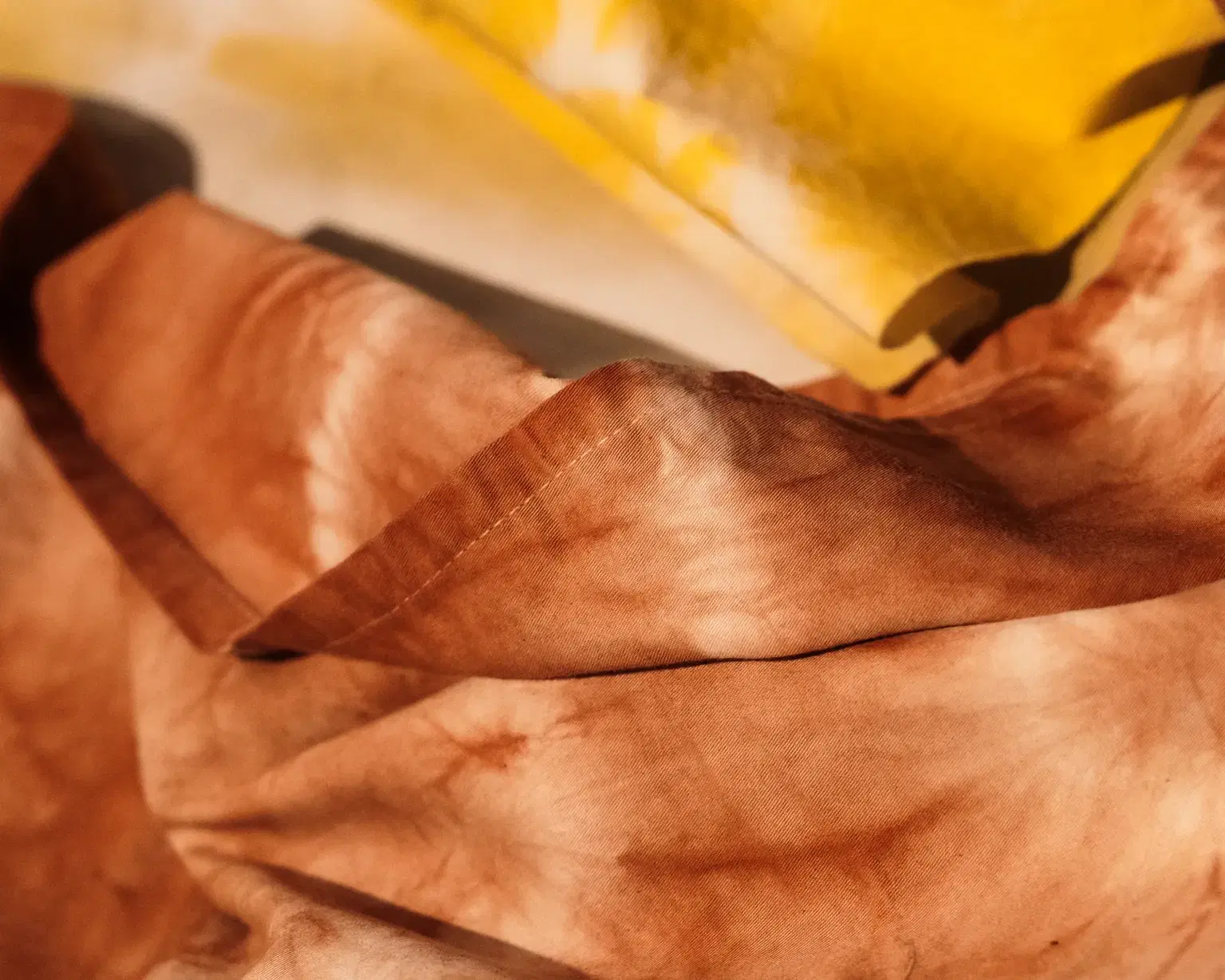
Potato Head’s Do Good Experiences invite people to take part in environmental initiatives in and beyond the Desa. The newest brings together a morning of mangrove conservation and an afternoon of natural dyeing: a day spent exploring Bali’s coast with a local fishing community, planting young trees and making a T-shirt or tote bag by hand.
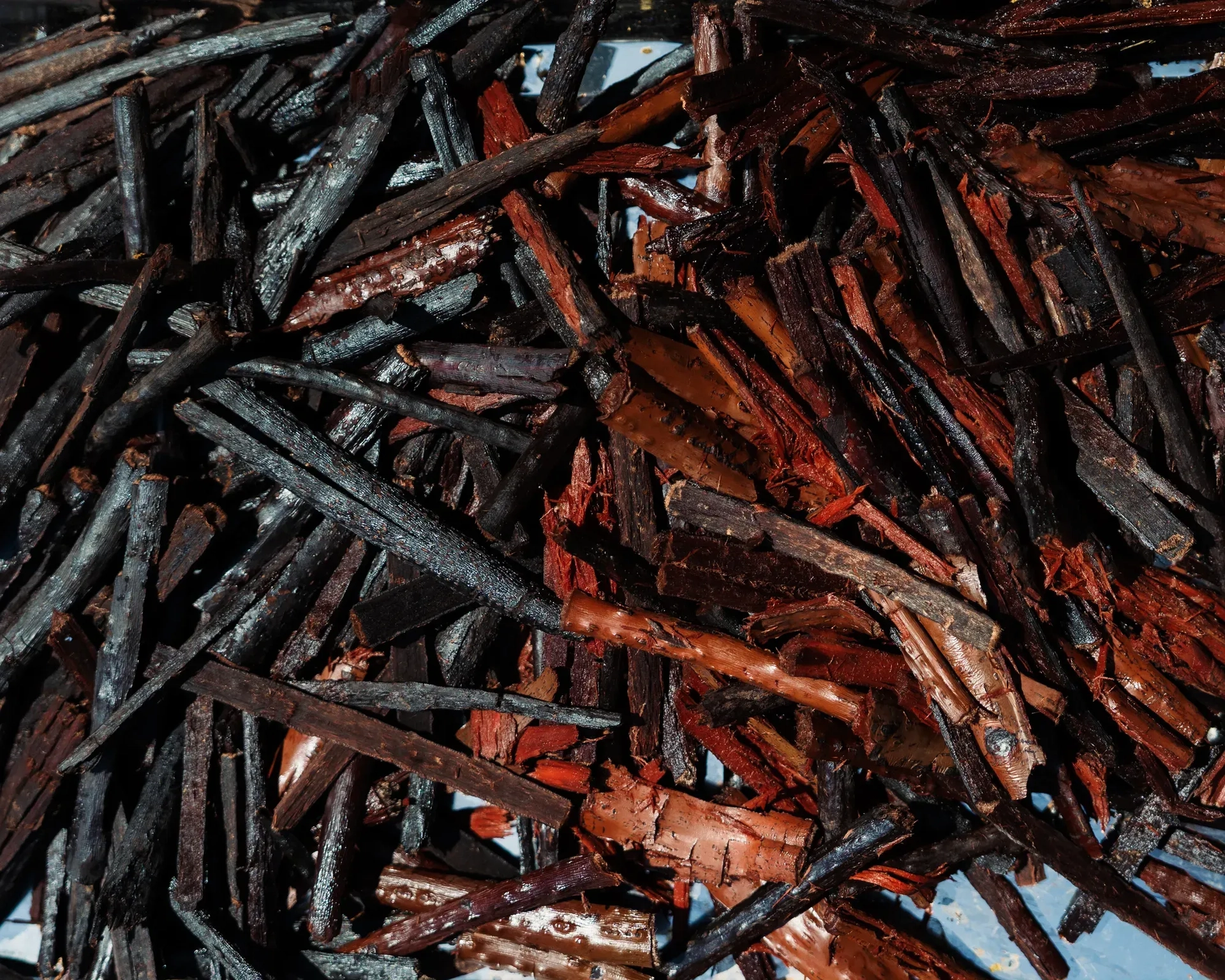
The connection between forest and fabric is the mangrove propagule. These young plants begin growing on a parent tree before falling into the water or mud below. Some take root and grow into trees; others dry out naturally. Gathered from the forest floor, the dried propagules can be boiled to make the soft, salmon-brown dye used in the workshop.
Into the mangroves
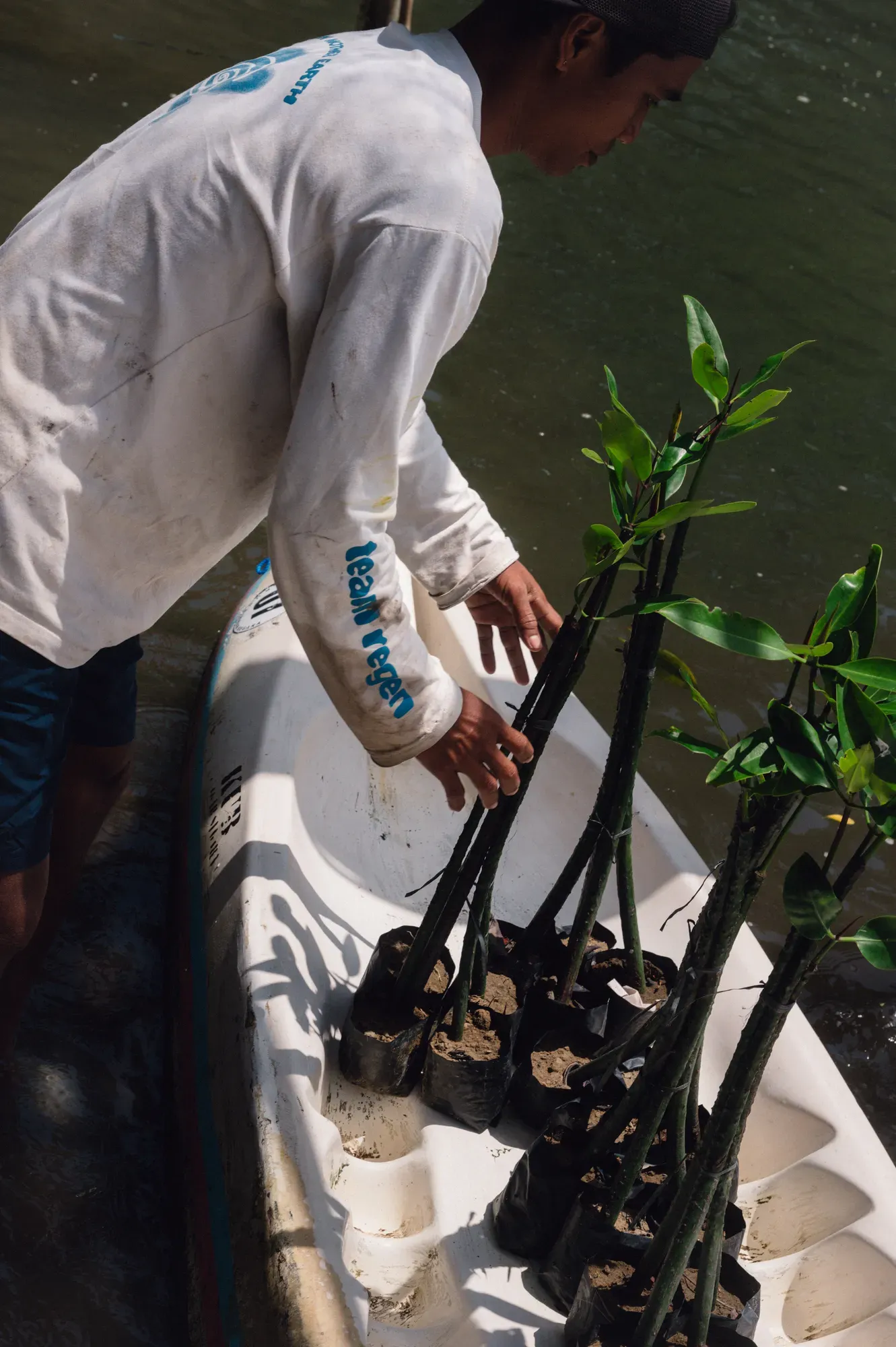
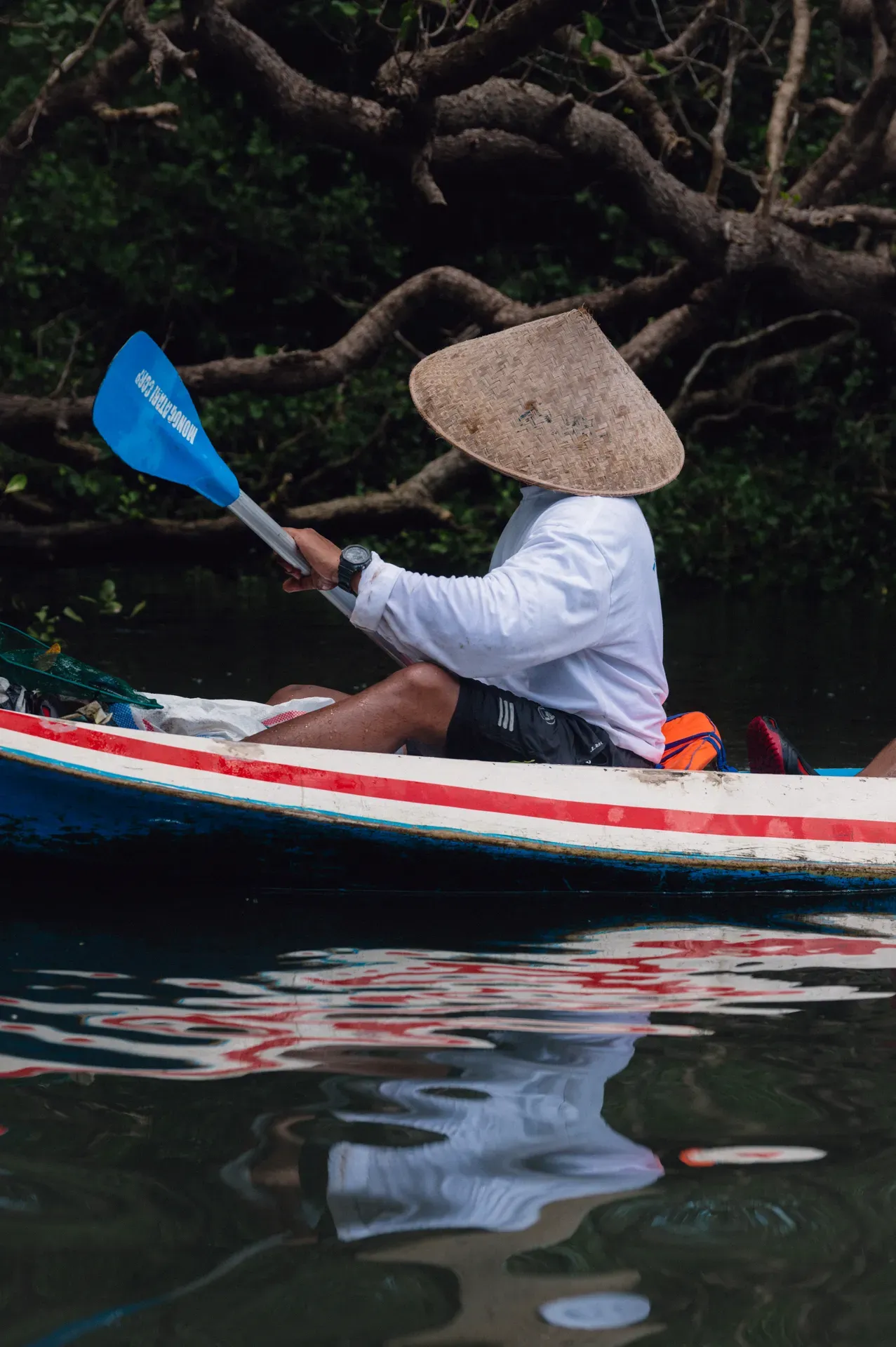
Taman Hutan Raya Ngurah Rai, known locally as Tahura, is a mangrove forest in southern Bali. Its roots provide shelter for fish and other wildlife and help hold coastal sediment in place. The trees and soil store carbon, while the waters support the fishing communities who live and work nearby.
One of those communities is Kelompok Usaha Bersama Simbar Segara from Pemogan Village. Potato Head has worked with the group at Tahura since 2023. Simbar Segara has permission to carry out coastal development activities across 32 hectares of the forest, and its members guide the conservation visit.
Growing a mangrove takes a little patience. For a separate planting project in 2024, Simbar Segara joined Udayana University and the Bendega community to prepare 500 Rhizophora seedlings from local propagules. Preparation began four months ahead of planting. The team looked for established roots, two pairs of leaves and a height of at least 20 centimetres before the seedlings went into the ground.
Good times, doing good
For the Do Good Experience, the group leaves Desa Potato Head to meet Simbar Segara at Tahura. Canoes carry everyone through the mangroves, with plastic and other waste collected from the water along the way. At the planting site, it’s time to step into the mud and join the local team in planting young mangroves.
The visits are part of a longer relationship with Tahura. In 2025, 247 participants collected 810 kg of waste and planted 1,058 seedlings; 566 of those were recorded as surviving. The planting and survival figures tell different parts of the story: a young mangrove needs the right conditions to grow after it goes into the ground. The results appear in Cultivating Progress, our 2025 Sustainability Report.
After the canoe trip and planting, lunch is served at Tahura’s bale bengong, a Balinese hut. Nasi kuning, or yellow rice, and rocket juice are on the menu. The stools have a connection to the forest too: Potato Head’s Waste Lab made them from waste collected during mangrove conservation. Before heading back to the Desa, the group gathers naturally dried propagules for the afternoon workshop.
A little colour from the forest
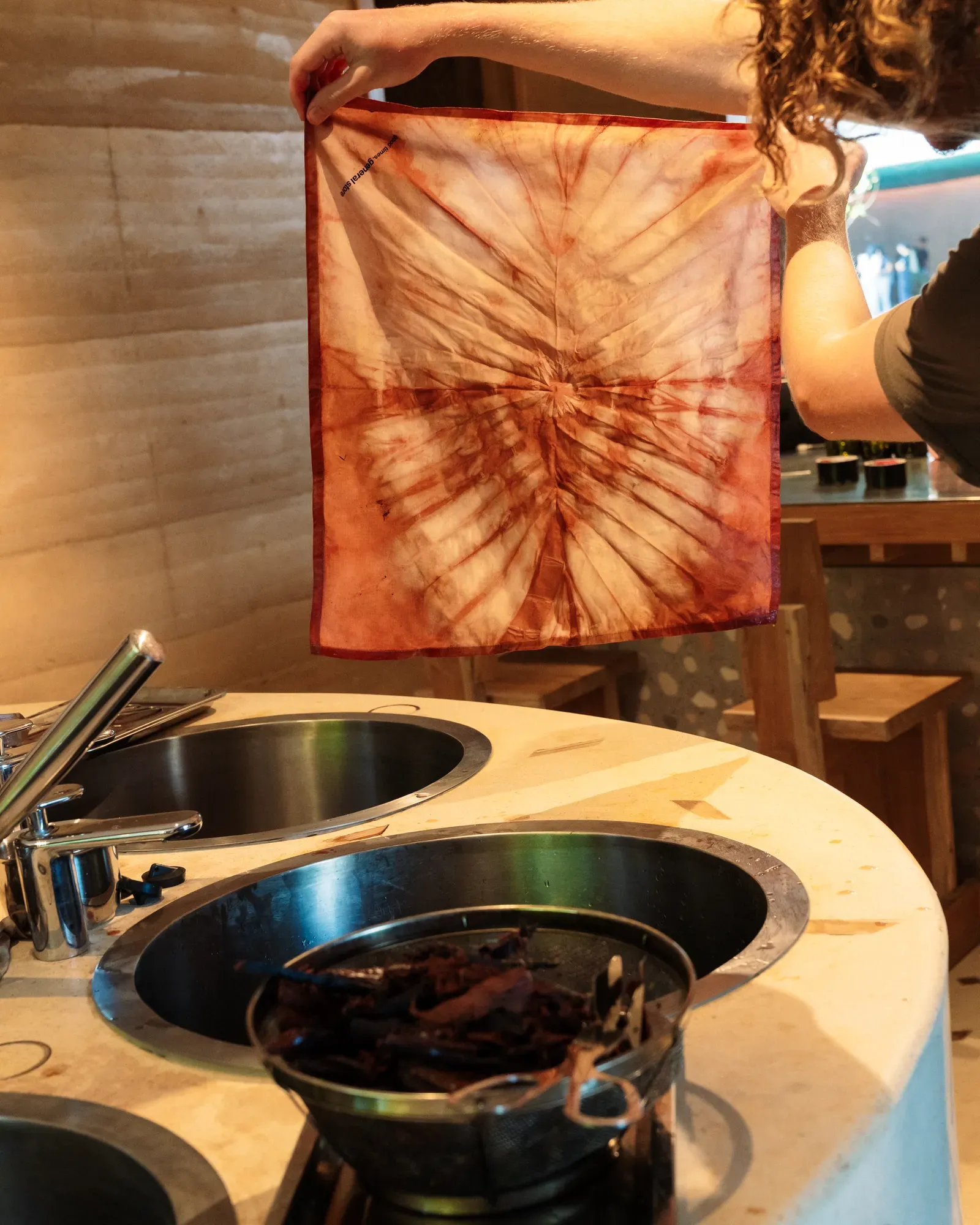
At Good Times General Store, the propagules gathered at Tahura offer a closer look at how natural colour is made. The dye practitioners use cut, oven-dried propagules, boiling them to draw out the colour. Preparation takes time: around two hours in the oven, two in the pot and a week of resting and daily reheating. Betel lime helps the dye bond with the fabric.
Happily, there’s no need to wait a week to get started. A batch of mangrove dye is prepared in advance, ready for the group to use that afternoon. Its warm salmon-brown shade comes from the propagules; the patterns are up to the hands folding and tying the fabric.
The technique is jumputan, an Indonesian form of tie-dye. The cloth is folded and bound before dyeing, leaving the tied sections lighter. Once the knots come off, the pattern appears. Participants practise on a napkin before making a T-shirt or tote bag. The napkins and tote bags are made from repurposed linen bedsheets previously used at the Desa.
The finished piece is a reminder of a day spent getting to know the mangroves: the canoe trip, the people at Tahura, and the fallen propagules that found their way into the dye pot.
Sustainability is a long-term journey. For a behind-the-scenes look at the work, our Cultivating Progress 2025 sustainability report shares a closer view of the initiatives taking shape at Potato Head.