The Sanur Kite Tradition
In coastal Bali, kite-making is an active seasonal discipline tied directly to Musim Angin, the dry-season winds that blow across the island from June through August. Kites are built within the village banjar (community center), where knowledge of timber, balance, and wind forms passes down through generations.
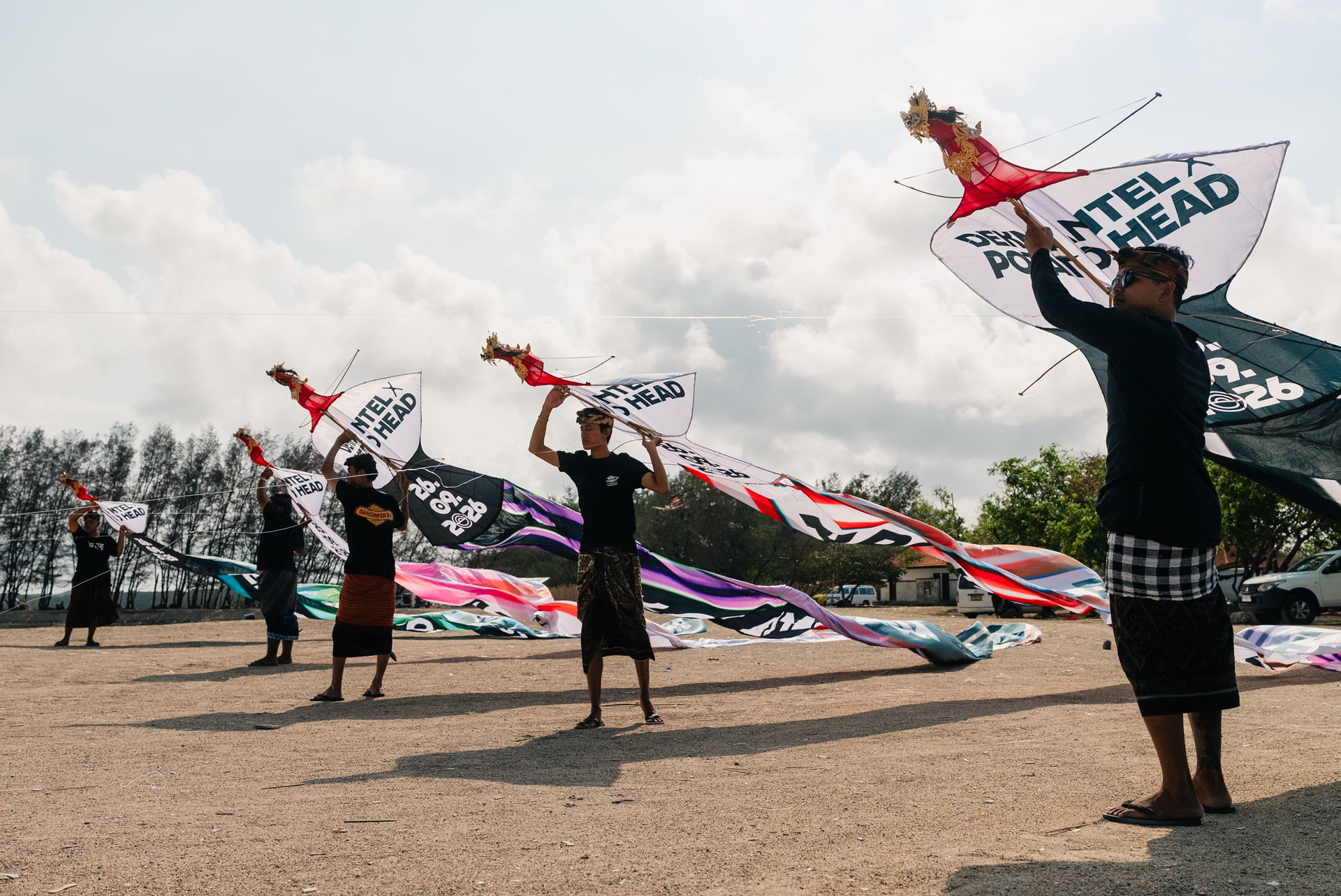
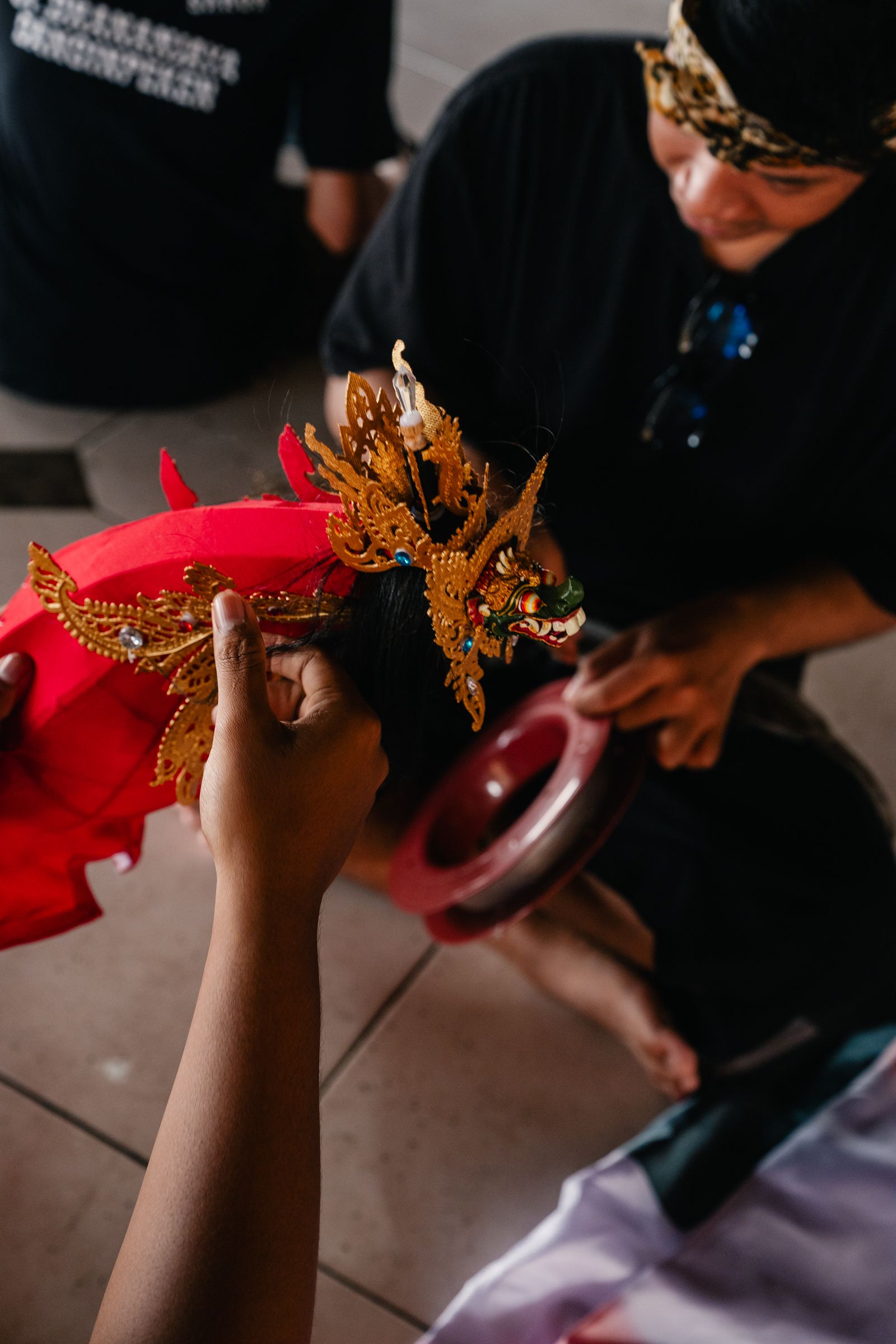
Among these traditional structures, the Janggan holds a distinct place in Sanur. It is a sacred kinetic form recognized by a massive, sweeping fabric tail that stretches up to one hundred meters in length, balanced by a hand-carved wooden head depicting Naga Basuki. In Balinese cosmology, Naga Basuki is the mythical dragon guardian responsible for maintaining equilibrium between the earth and the ocean depths.
Form and Material
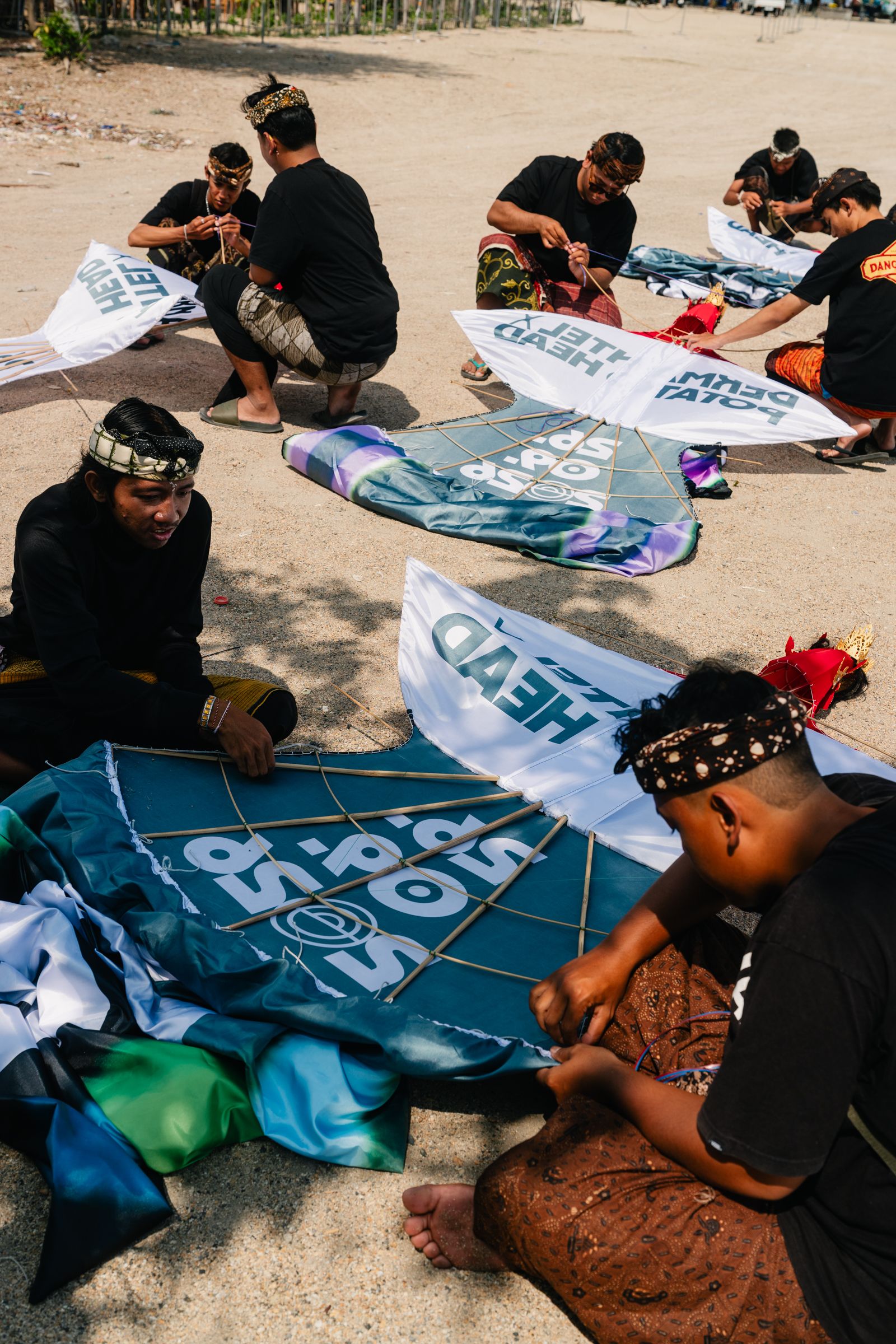
Bringing Dekmantel's screen-born graphics into the coastal sky meant merging modern printed textiles with classic Balinese structural design.
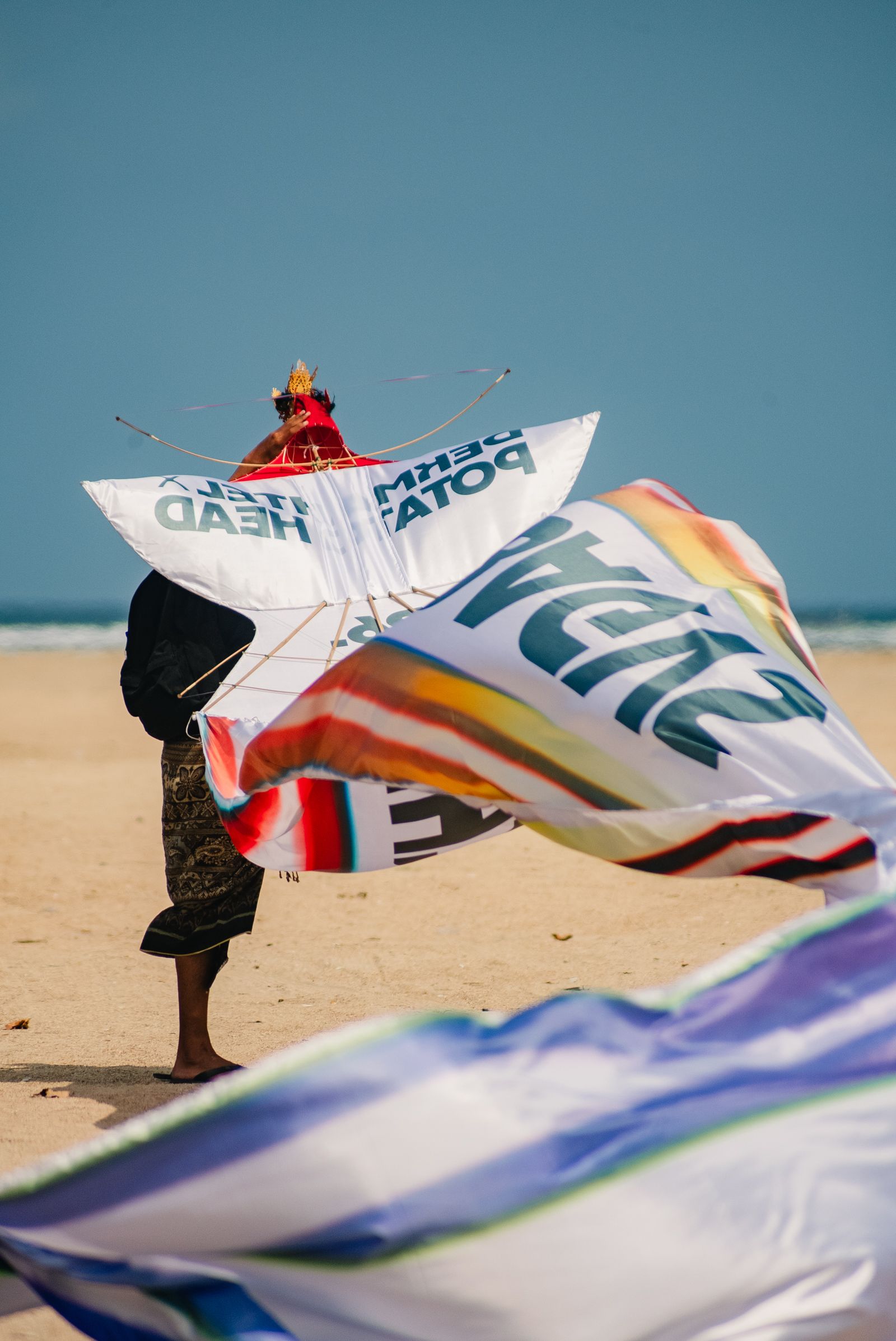
Dekmantel’s geometric artwork was printed onto weather-resistant sails, which were then brought directly to the banjar. Artisans in Sanur Kauh hand-stitched these sails over custom bamboo frames, joining the dragon head, main body, and long tail into a single continuous line. This unified shape allows the entire kite to flex and stay stable in high ocean air.
Acoustic Bows in the Ocean Breeze
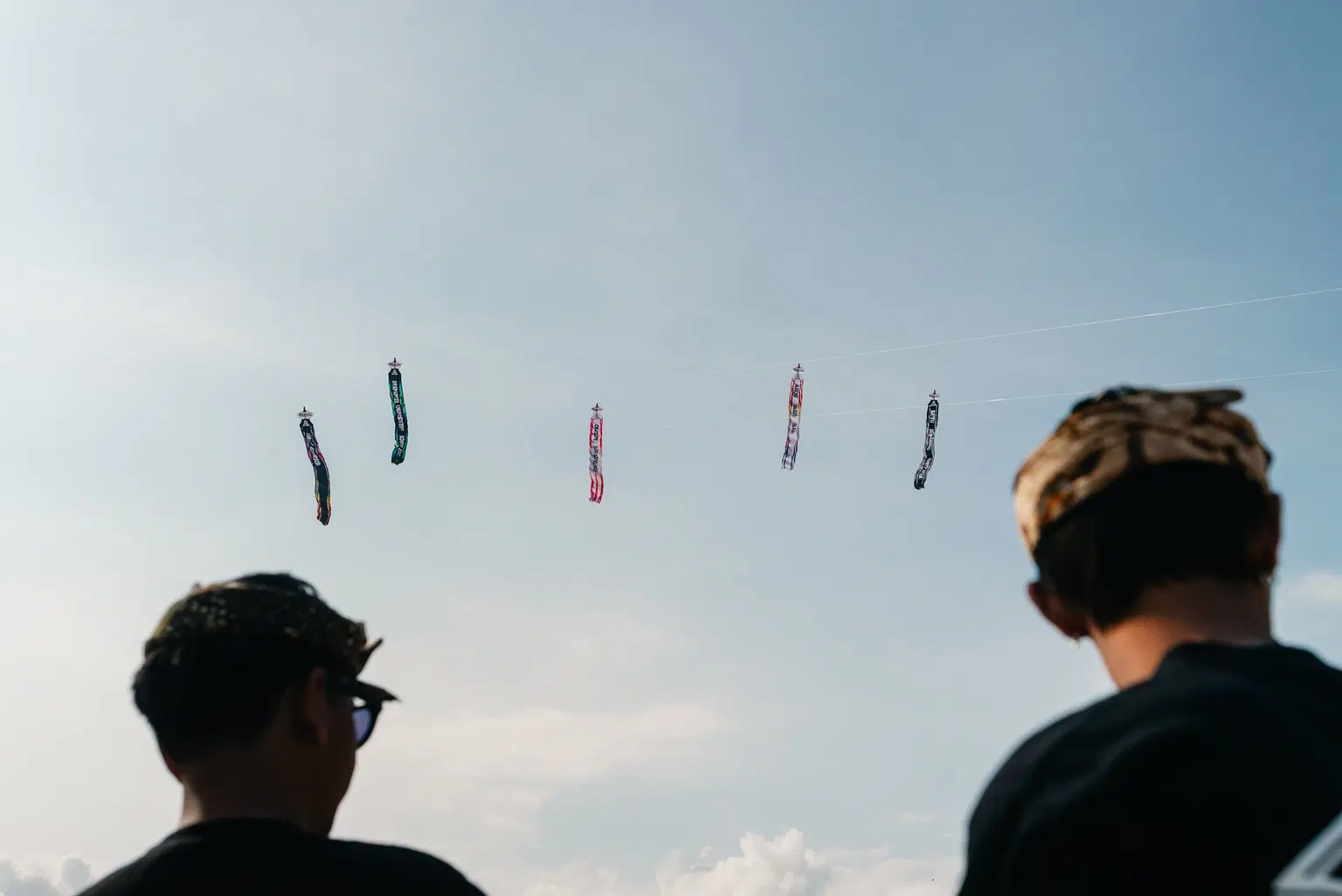
High above the coast, the offshore wind pulls the graphic sails taut, giving the geometric shapes a fluid movement against the sky.
The installation also creates its own sound. Mounted across the top of each bamboo spine is a Guwang—a traditional carved wooden bow fitted with a taut ribbon. As sea air rushes through the wood, the bow vibrates overhead to generate a low, steady acoustic hum. This natural frequency drifts down over the sand, blending into the music playing across the lawn below.
Flight over Mertasari
Launching a Janggan is a collective effort. A full crew from Banjar Dangin Peken directs the heavy carved head, manages the main tether line, and lays out the long tail along Mertasari Beach before catching the coastal updrafts.
Our short film traces every chapter of this work—from the wood carving in Sanur Kauh to the final launch over the oceanfront at the Desa.